
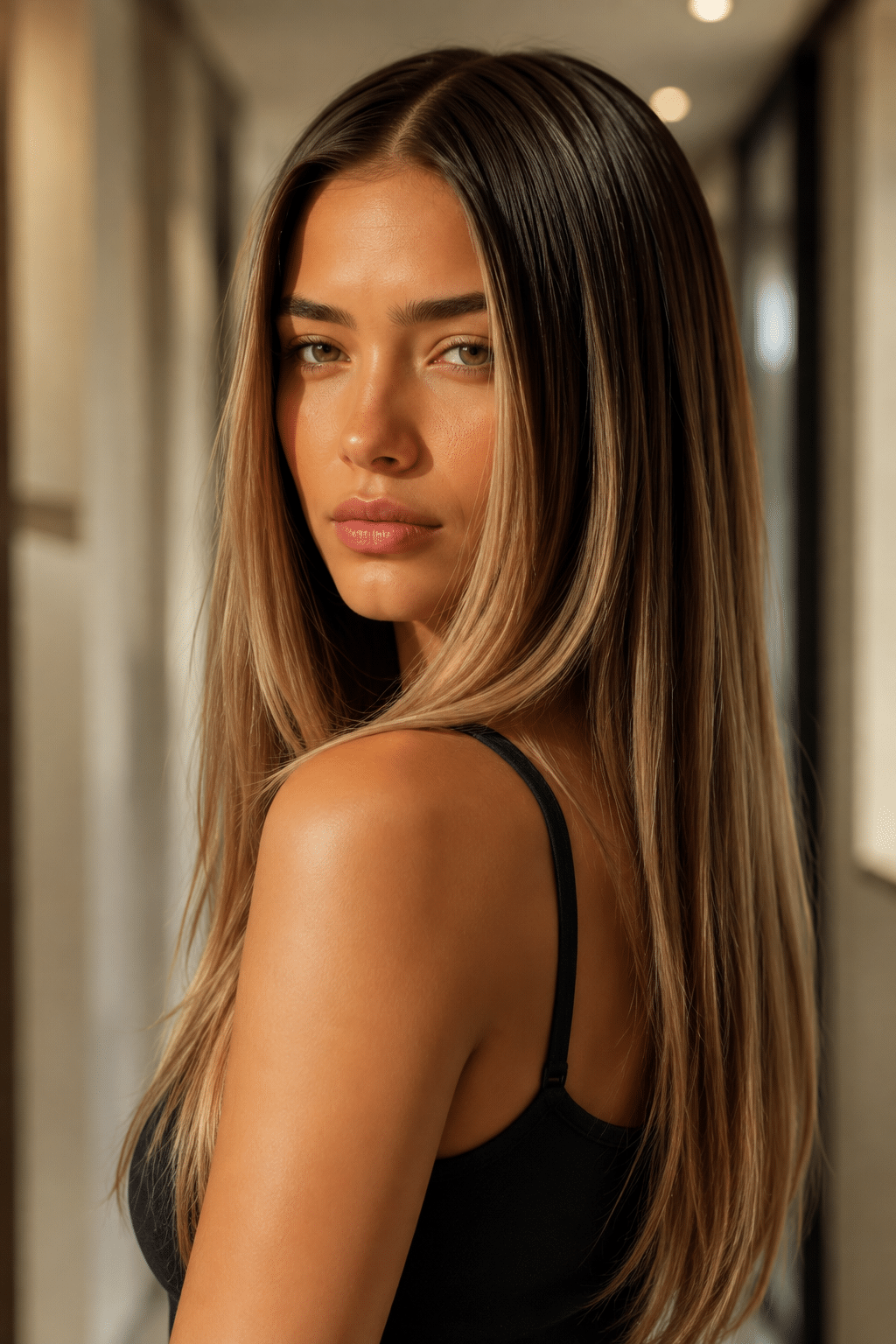
Silky straight balayage is one of those hairstyles that proves you do not need curls or dramatic layers to make dimensional color look beautiful. Inspired by the image, this style combines a deep brunette root with warm caramel-blonde ribbons that gradually brighten through the lengths. The hair stays sleek, smooth, and straight, allowing every transition in the color to remain visible.
What makes this look feel especially modern is the contrast between rich roots and softly illuminated ends. Instead of obvious stripes, the lighter pieces appear melted into the brunette base. The center part keeps the shape balanced, while long face-framing sections brighten the front without overwhelming the natural depth.
A glossy finish makes the style feel especially refined. When the cuticle lies smooth, light reflects across the surface and emphasizes both the richness of the brunette and the brightness of the highlights. The result is polished enough for an evening out but simple enough for everyday wear.
The Best Color Placement for Silky Straight Balayage
The most flattering silky straight balayage usually keeps the roots darker and introduces brightness gradually. The front sections can be a little lighter because they frame the face, while the interior layers remain deeper to preserve contrast.
In the inspiration image, the color feels balanced rather than heavily blonde. The brightest pieces are concentrated around the face and lower lengths, but enough brunette remains throughout the hair to maintain richness. This is what keeps the overall color sophisticated instead of overly light.
This placement is also practical because it grows out softly. Since the highlights are not placed as one solid band directly at the scalp, new growth tends to blend more naturally than it would with traditional full-root highlights.
Choosing the Right Tone
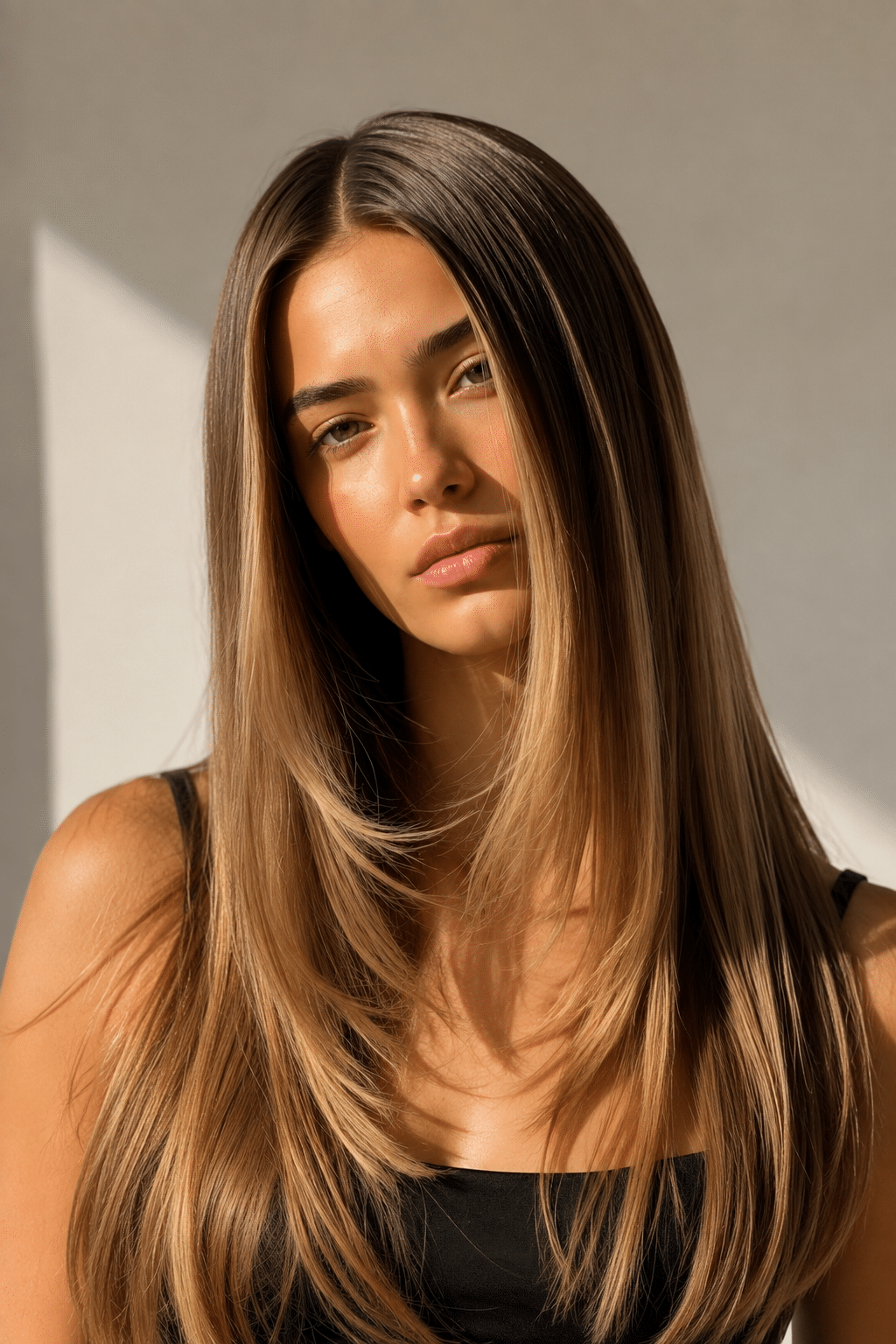
Color tone determines whether the finished look feels warm, neutral, or cool. Caramel and honey shades create a sun-kissed result and work beautifully with warm brunette bases. Beige and neutral blonde tones give a more understated finish, while mocha and light brown ribbons are ideal for someone who wants dimension without looking noticeably blonde.
The best shade should complement both the natural base and the complexion. A professional colorist can adjust the formula so the highlights enhance the skin rather than compete with it.
For a soft result, the lighter pieces do not need to be extremely pale. Keeping the color only a few levels brighter than the base often creates a richer, healthier-looking finish.
How to Ask Your Stylist for Silky Straight Balayage
Bring a clear reference image to your appointment and explain that you want silky straight balayage with natural root depth, fine face-framing brightness, and softly blended caramel or beige tones through the mid-lengths and ends.
Tell your stylist that you plan to wear the hair straight often. This is important because color placement that looks seamless on curls should also look smooth when every strand lies flat. Ask for a gradual transition rather than chunky highlights.
The front can be slightly brighter, but the interior should retain enough darker hair to create depth. If your hair has been previously colored, discuss its history before lightening so your stylist can choose a realistic plan that protects the condition of the hair.
The Best Haircut for This Look
Long, softly blended layers complement this sleek color because they create movement without disturbing the clean finish. The hairstyle in the image appears long and polished, with gentle face-framing pieces rather than dramatic short layers.
Fine hair generally benefits from minimal layering and a strong perimeter. This helps the ends appear thicker when the hair is straight. Thick hair can handle more internal shaping, but the lower edge should still look full and healthy.
A center part works particularly well because it shows the contrast evenly on both sides of the face. An off-center part can create a softer, slightly more relaxed effect while still preserving the sleek character of the style.
How to Create a Sleek Straight Finish
To recreate silky straight balayage at home, start with freshly washed, conditioned hair and remove excess water gently with a towel. Avoid rough rubbing, which can create frizz before styling even begins.
Apply a lightweight heat protectant from the mid-lengths to the ends. If the roots tend to fall flat, use a small amount of root-lifting product, but keep heavy creams away from the scalp.
Blow-dry the hair in sections using a paddle brush or large round brush. Direct the airflow downward along the hair shaft. This encourages the cuticle to lie flatter and helps create the reflective surface that makes straight balayage look so polished.
Once the hair is completely dry, use a flat iron only where needed. Work with manageable sections and avoid repeatedly passing over the same hair. The goal is smoothness, not excessive heat.
Finish with a tiny amount of lightweight serum through the ends. A soft shine spray can also enhance the color without making the hair look oily.
How to Keep Silky Straight Balayage Glossy
Shine is essential to silky straight balayage because straight styling puts the surface of the hair on full display. Dryness, split ends, and rough texture are easier to notice than they are in heavily curled styles.
Use conditioner every time you shampoo and add a moisturizing mask whenever the lengths begin to feel dry. Lightened sections may need more conditioning than the natural brunette areas because the coloring process can increase porosity.
Avoid applying too much oil near the roots. A few drops through the ends are usually enough to create shine without removing movement. Regular trims are equally important because even beautiful color loses impact when the ends become uneven or fragile.
Maintaining Silky Straight Balayage Between Salon Visits
One of the biggest advantages of silky straight balayage is its soft grow-out. A deeper root means you do not necessarily need frequent full-color appointments.
A salon gloss can refresh the tone when highlights begin to look dull or too warm. Glossing also helps restore shine without repeating the entire lightening service. A larger balayage refresh may only be needed every few months, while face-framing pieces can be brightened sooner when you want extra light around the complexion.
Color-safe shampoo and conditioner help protect the tone from premature fading. Lukewarm water is also preferable to very hot water, which can contribute to dryness and faster color loss.
Protecting the Hair From Heat Damage
Because this sleek style often involves blow-drying or flat ironing, heat protection should be part of every styling routine. Lightened hair can be more vulnerable to dryness, so repeated high temperatures may reduce shine and encourage breakage.
Use the lowest temperature that effectively smooths your hair. Fine or fragile strands usually need less heat than coarse, resistant hair. Make sure the hair is completely dry before using a flat iron.
When possible, alternate straight styling with heatless days. A careful blow-dry alone may be enough to create a sleek finish, especially when the natural texture is already relatively straight.
Silky Straight Balayage for Fine Hair
Fine hair can wear silky straight balayage beautifully, but thoughtful placement matters. Too many lightened sections can reduce the appearance of density, particularly near the ends.
Keeping more brunette depth underneath creates contrast and makes the lighter ribbons stand out without requiring excessive bleaching. A strong, blunt or softly rounded perimeter can also help fine hair appear fuller.
Lightweight products are essential. Thick creams and oils may flatten the roots and separate the strands. A fine mist heat protectant, light volumizer, and small amount of serum are usually enough.
Silky Straight Balayage for Thick Hair
Thick hair offers plenty of space for dimensional color. A stylist can distribute lighter pieces throughout the surface and interior while maintaining enough depth for contrast.
Long internal layers may remove unnecessary weight and make the hair easier to blow-dry. Over-thinning should still be avoided because straight ends look best when they remain healthy and substantial.
Thick hair may require more time to dry completely. Working in sections helps create a smoother finish and reduces the temptation to use excessive flat-iron heat afterward.
Face-Framing Highlights for a Brighter Finish
Face-framing brightness can transform the overall look without requiring a dramatic full-head color change. Lighter pieces around the hairline draw attention toward the eyes and create a fresh, illuminated appearance.
For a subtle result, choose highlights only slightly lighter than the overall balayage. For stronger contrast, the front pieces can be brighter while the rest of the hair remains caramel or medium brown.
The placement should still blend into the lengths. A harsh block of light color around the face can look disconnected when the hair is straight, so the transition needs to remain soft.
Common Mistakes to Avoid
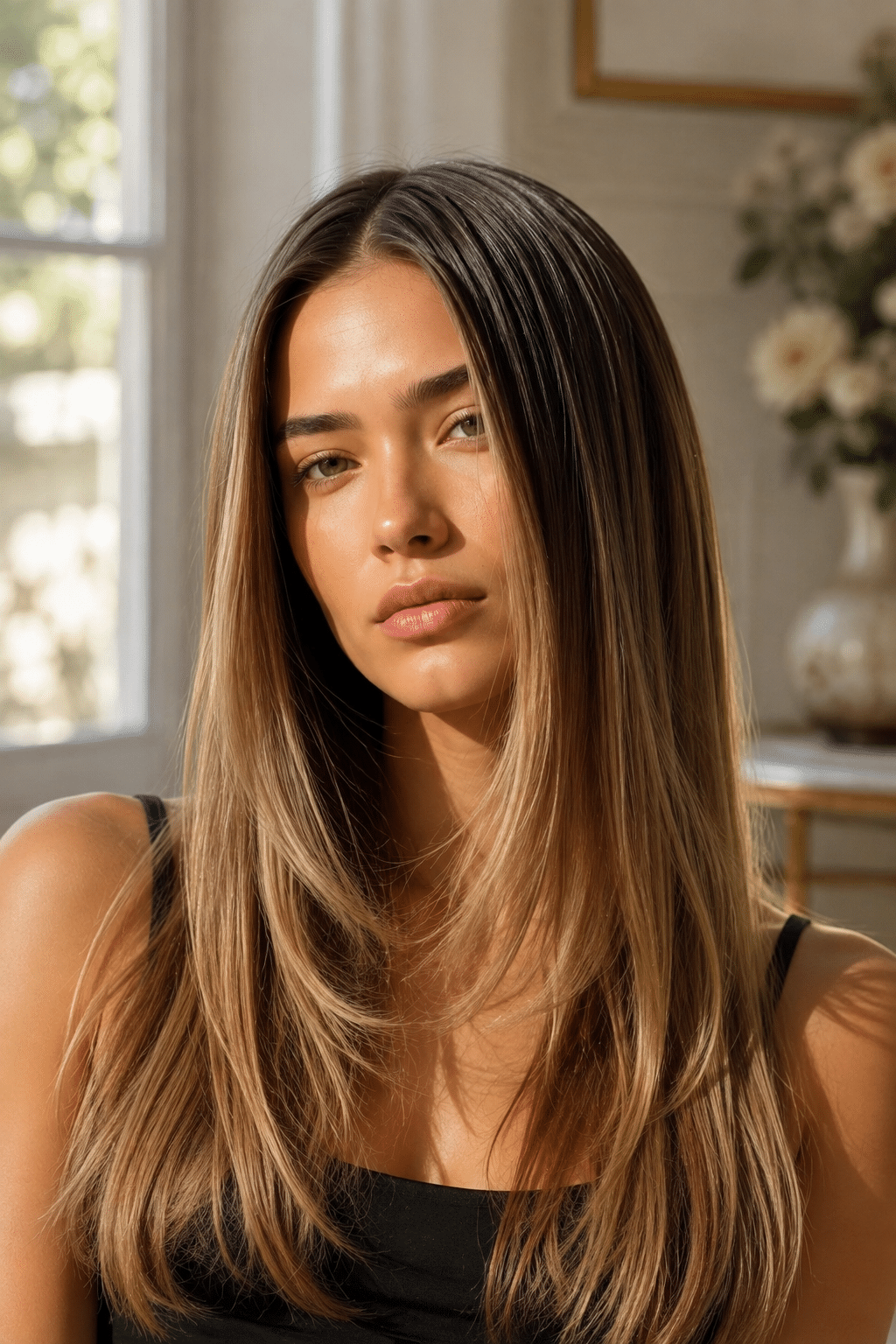
The most common mistake is creating too much contrast too quickly. Extremely pale highlights against a very dark base can look striped instead of blended.
Over-lightening the ends is another issue. If the lower lengths become too porous, they can appear dry and lose the sleek finish that makes the style attractive.
Using heavy styling products can also reduce shine rather than improve it. Too much oil makes straight hair separate into sections and can cause the roots to look greasy.
Finally, do not rely on repeated flat-ironing to create gloss. Healthy preparation, a smooth blow-dry, good conditioning, and moderate heat will usually produce a better long-term result.
Frequently Asked Questions About Silky Straight Balayage
Is balayage suitable for straight hair?
Yes. Straight hair can showcase precise, well-blended color beautifully. The key is careful placement because every transition is more visible.
How often does balayage need refreshing?
The schedule varies, but many people can go several months between major lightening appointments. Glossing or small face-framing refreshes may be done more frequently.
Can brunettes get balayage without going blonde?
Absolutely. Caramel, mocha, chestnut, and light brown tones can create noticeable dimension while keeping the overall result brunette.
How do I prevent straight balayage from looking dry?
Use heat protection, moisturizing treatments, color-safe products, moderate styling temperatures, and regular trims.
Does balayage work on fine hair?
Yes. Strategic placement can add visual dimension, but the hair should not be over-lightened or over-layered.
Final Thoughts on Silky Straight Balayage
Silky straight balayage is a timeless choice for anyone who loves sleek hair but still wants visible color dimension. The deep brunette root gives the style richness, while soft caramel and beige ribbons add brightness without overwhelming the natural base.
The straight finish allows every tonal transition to be seen, which is why good blending, healthy ends, and shine are so important. Long face-framing pieces make the color feel softer around the face, while a strong perimeter keeps the hairstyle looking full.
With thoughtful color placement, gentle maintenance, regular conditioning, and responsible heat styling, this hairstyle can remain glossy, sophisticated, and beautifully wearable between salon visits.