
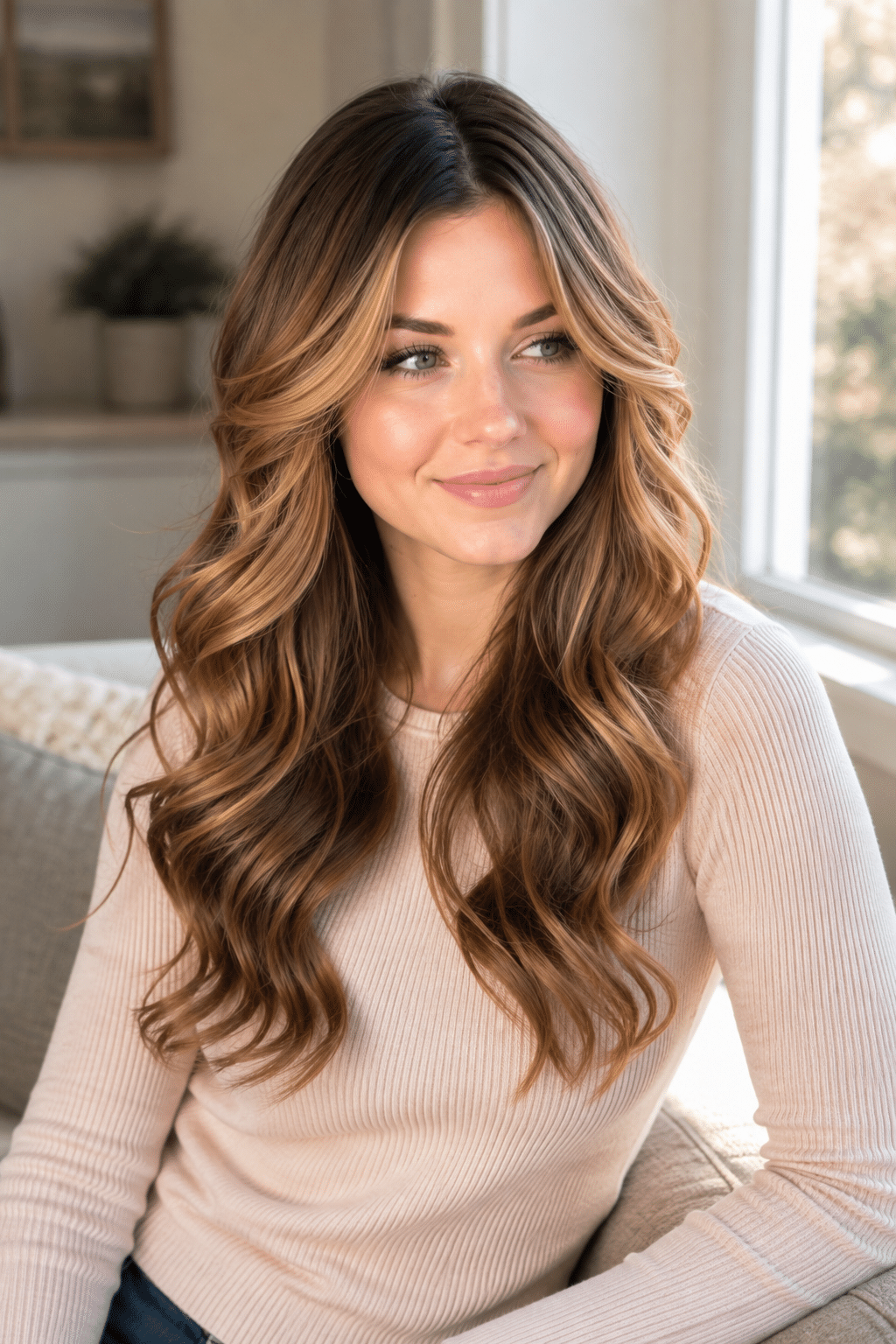
There is something instantly flattering about soft balayage waves. They combine natural-looking color, movement, and shine without making the hair feel overly styled. Inspired by the hairstyle in the image, this look starts with a rich brunette base and gradually introduces warm caramel and honey tones around the face and through the lengths. The result is bright enough to feel fresh, yet deep enough to keep the luxurious brunette character.
What makes this style feel modern is the seamless transition between dark and light. The root remains deeper, which gives the color depth and makes regrowth less noticeable. Around the face, brighter pieces soften the complexion and draw attention to the eyes. Long layers create movement, allowing each bend in the hair to reveal a different shade.
The waves themselves are relaxed rather than perfectly uniform. That slight imperfection is part of the charm. The hairstyle looks polished enough for a dinner, event, or photoshoot, but still natural enough for everyday wear.
What Defines Soft Balayage Waves?
The defining quality of soft balayage waves is subtle contrast. Instead of bold stripes or obvious blonde sections, the lighter tones melt into the brunette base. The brightest ribbons usually appear around the face and through selected mid-lengths, while darker hair remains underneath to provide richness.
The haircut is just as important as the color. Long face-framing layers begin around the cheekbones or jaw and gradually blend into the rest of the hair. The ends stay full, which prevents the style from looking thin or overly layered.
A center or slightly off-center part works beautifully with this look because it lets the highlighted front sections sweep away from the face. When the hair is curled, those lighter strands catch the light and make the shape appear even more dimensional.
Why This Hair Color Works on So Many People
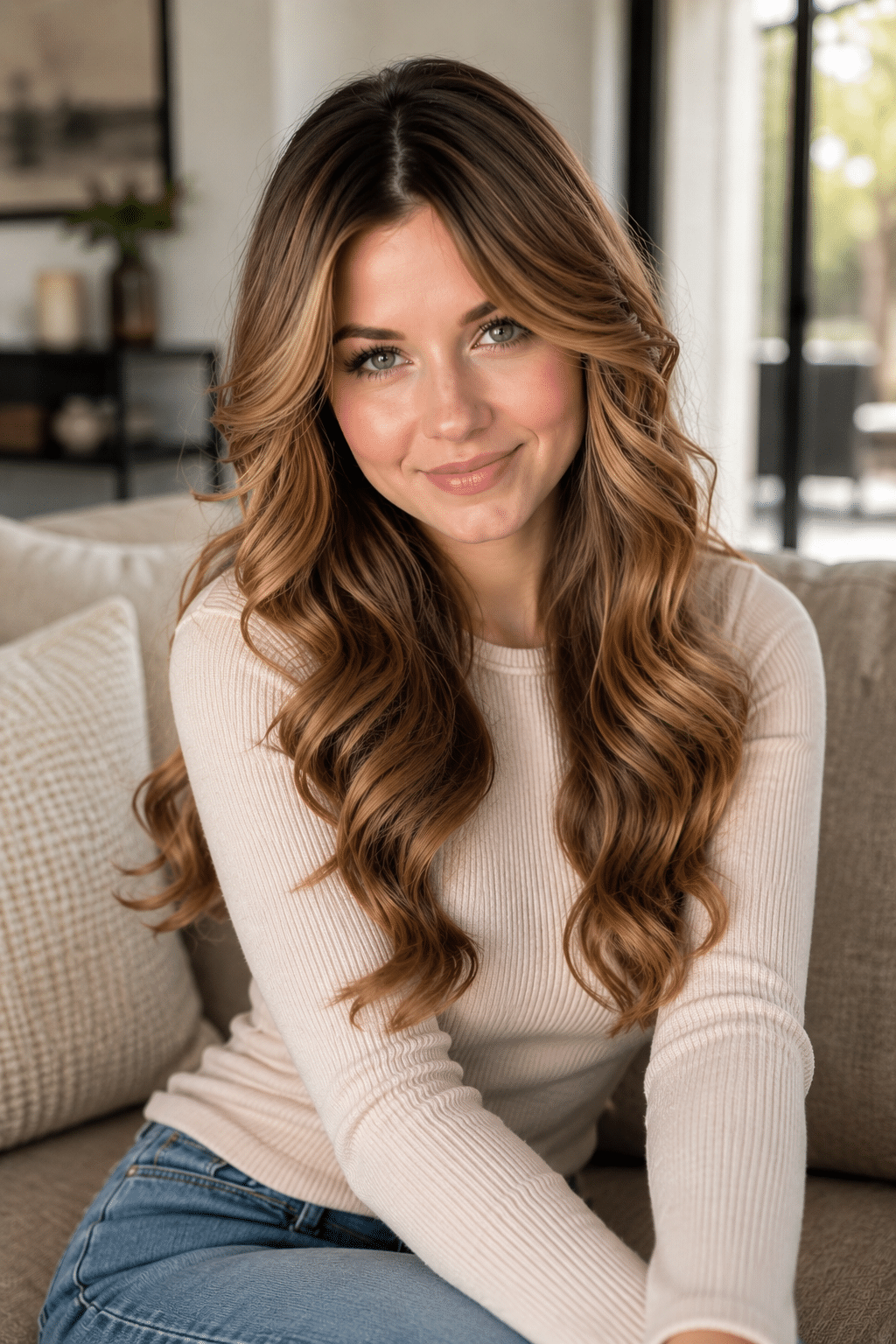
One reason soft balayage waves are so versatile is that the color can be customized. Warm caramel tones look beautiful on golden and neutral undertones, while beige-brown or mocha ribbons create a softer option for cooler complexions.
The level of contrast can also be adjusted. Someone who wants a subtle result can keep the highlights only a few shades lighter than the base. Someone who prefers a brighter finish can add stronger face-framing pieces while keeping enough brunette underneath to maintain depth.
The waves make the color even more flattering because they create natural shadows and highlights. Straight hair can sometimes hide subtle tonal changes, but movement makes every shade visible.
The Best Haircut for Long Balayage Hair
The best foundation for soft balayage waves is a long haircut with blended layers. The front pieces should frame the face without becoming disconnected from the rest of the lengths. Cheekbone-length layers create more lift, while jaw- or collarbone-length pieces offer a softer, lower-maintenance result.
Fine hair usually looks best with fewer layers and a strong perimeter. Too many short sections can make the bottom look sparse. Thick hair can support more internal layering, which removes heaviness and helps the waves separate naturally.
A softly rounded or U-shaped perimeter is especially flattering on long hair. It preserves fullness through the center while creating gentle movement around the sides. This also makes the balayage more visible from the back.
How to Ask Your Stylist for This Look
When asking for soft balayage waves, bring a clear reference image and explain that you want a brunette result with natural root depth, warm face-framing brightness, and softly blended caramel pieces through the lengths. Make it clear that you prefer a melted effect rather than high-contrast stripes.
For the cut, ask for long face-framing layers that connect smoothly to the rest of the hair. Tell your stylist how short you are comfortable going around the front, especially if you wear ponytails often or prefer easy styling.
It is also important to discuss your color history. Previously dyed dark hair may need more than one session to reach a lighter caramel tone safely. Natural medium-brown hair can often achieve the effect more easily.
Choosing the Right Balayage Tone
The tone of the highlights can completely change the mood of the hairstyle. Caramel creates warmth and softness, honey produces a brighter sun-kissed effect, and chestnut keeps the result rich and brunette. Beige-brown and mocha highlights are ideal for someone who wants dimension without too much golden warmth.
The lighter pieces do not need to be extremely blonde to look beautiful. In many cases, keeping them only a few levels lighter than the base produces a softer and more expensive-looking finish.
A salon gloss after lightening can refine the tone, smooth the appearance of the hair, and add extra shine. Glossing is also a useful way to refresh faded color without repeating a full balayage service.
How to Style Balayage Hair at Home
Start with clean, completely dry hair and apply heat protectant before using any hot tool. If your roots tend to fall flat, add a lightweight volumizing mousse or root spray before blow-drying. Keep heavy oils away from the roots so the style stays airy.
A medium or large curling iron works well for soft balayage waves. Divide the hair into manageable sections and curl the pieces around the face away from the cheeks. Through the back, alternate the direction of a few sections so the waves do not merge into one uniform curl.
Leave the ends slightly relaxed for a more modern finish. Once each section is curled, allow it to cool completely before touching it. This cooling time helps the shape last without relying on heavy hairspray.
After the hair has cooled, separate the curls gently with your fingers or a wide-tooth comb. Finish with a small amount of serum on the ends and a flexible-hold spray through the lengths.
Face-Framing Layers Make the Color Stand Out
Face-framing layers are one of the strongest features of soft balayage waves because they place movement exactly where the color is brightest. When those shorter pieces curve away from the cheeks, the caramel ribbons reflect light and naturally brighten the face.
Cheekbone-length pieces create stronger definition, while longer layers are easier to maintain. If you are unsure, starting longer is usually safer because your stylist can always shorten them later.
The goal is a gradual transition. The front layers should blend into the rest of the haircut so the style still looks balanced when worn straight.
How to Make the Waves Last Longer
Long-lasting soft balayage waves begin with proper preparation. The hair should be completely dry before curling, and every section should cool before it is loosened.
If your hair loses curls quickly, use slightly smaller sections and add a light texturizing spray before styling. Avoid coating the lengths in heavy oil, because that can make the waves drop faster.
At night, gather the hair loosely on top of the head or create a soft braid to protect the shape. A smooth pillowcase can reduce friction and help preserve the style. In the morning, refresh only the sections that need extra definition instead of curling the entire head again.
Heatless Ways to Create the Look
You can create soft balayage waves without direct heat every time. A heatless curling ribbon gives broad bends, while two loose overnight braids create a relaxed texture. Large foam rollers are another good choice when you want a smoother, blowout-inspired finish.
For the best result, begin with hair that is slightly damp rather than wet. Apply a small amount of lightweight styling product, form the waves, and leave the hair in place until it is completely dry.
Heatless methods may create less precision than a curling iron, but that softer texture often makes balayage look even more natural.
Maintaining the Color and Shine
The low-maintenance appeal of soft balayage waves comes partly from the darker root. Because the lighter pieces usually begin away from the scalp, regrowth looks softer than it does with traditional root-to-tip highlights.
Use shampoo and conditioner made for color-treated hair and avoid extremely hot water. A weekly moisturizing mask can help keep lightened sections soft, especially through the ends.
A salon gloss every six to eight weeks can refresh the tone and restore shine. Face-framing pieces may need brightening sooner than the rest of the balayage, while a larger color refresh can often be spaced several months apart.
Heat protection is essential. Even beautiful color can look dull when the hair becomes dry from repeated hot-tool use.
Styling Tips for Fine Hair
Fine hair can wear soft balayage waves beautifully when the haircut and color are planned carefully. Keep the layers relatively long and preserve density along the bottom. Strategically placed highlights can create the illusion of more movement without lightening too much hair.
Use lightweight products that provide lift without coating the strands. Volumizing mousse, texture spray, and flexible hairspray usually work better than thick creams.
When curling, use medium-sized sections and allow each one to cool completely. Gently expanding the waves with your fingers can make the hair appear fuller.
Styling Tips for Thick Hair
Thick hair is an excellent match for soft balayage waves because it naturally provides fullness and enough density for visible layering. Internal layers can remove heaviness while allowing the curled sections to move more freely.
The main goal is avoiding too much bulk through the lower half of the hair. Strategic layering around the face and through the mid-lengths can distribute volume more evenly.
Thick hair may need slightly smaller curling sections to hold the shape, but the heat setting should still be appropriate for the condition of the hair.
Common Mistakes That Can Ruin the Look
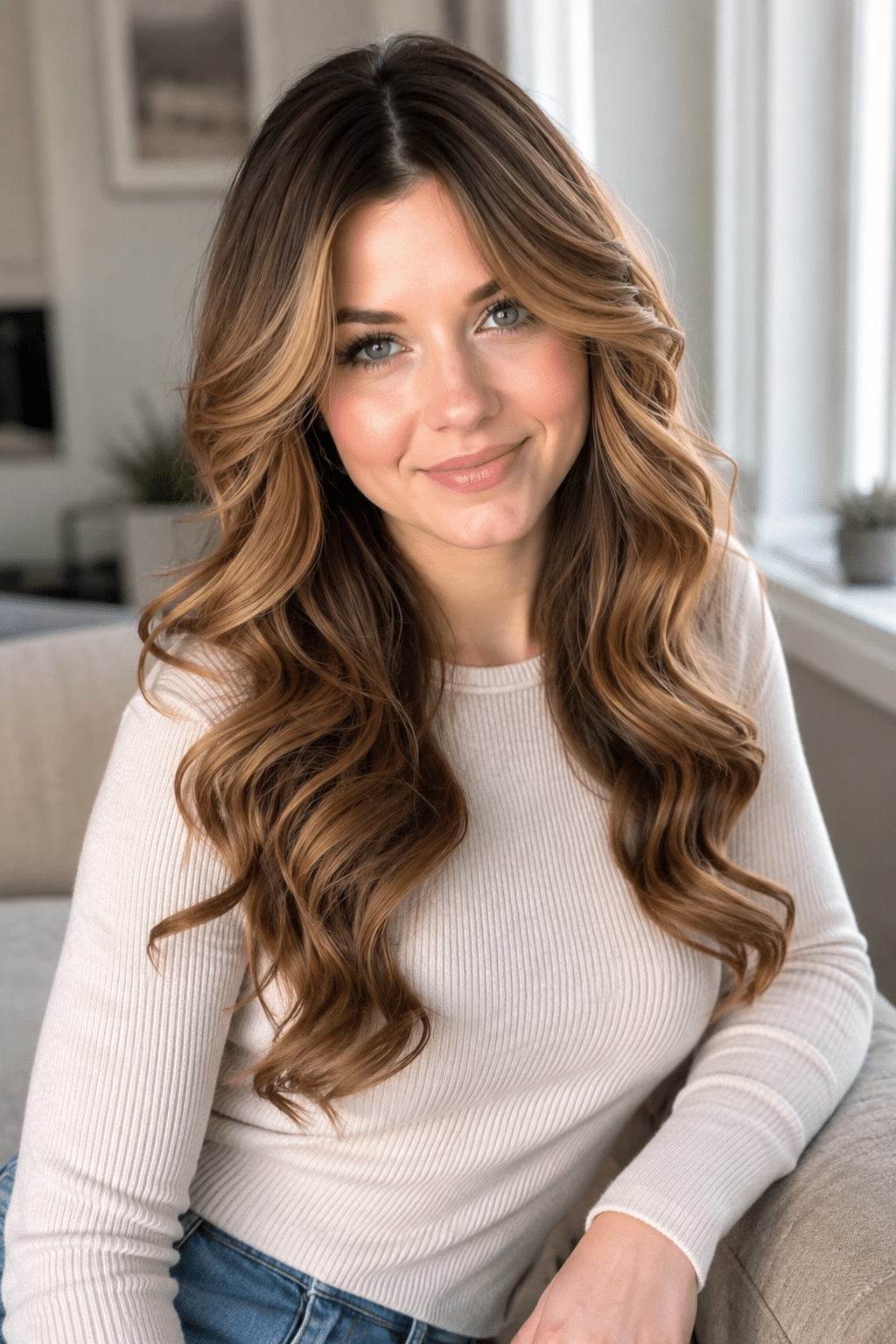
One common mistake is over-lightening. Balayage does not need to become blonde to look dimensional. Keeping enough brunette depth usually makes the final result richer and easier to maintain.
Another mistake is adding too many short layers to fine hair. The cut should support the color, not remove so much density that the ends appear weak.
Avoid curling every section in exactly the same direction. Gentle variation makes the waves look more natural and allows more of the color to show.
Heavy oils and strong hairspray can also work against the style. The prettiest soft balayage waves have shine and hold, but they still move naturally.
Frequently Asked Questions
Is balayage low maintenance?
Yes. Because the color is usually blended away from the scalp, the grow-out is softer than traditional highlights and often allows more time between major color appointments.
How often should balayage be refreshed?
Many people can wait several months between full balayage appointments. A gloss or face-framing refresh can be scheduled sooner if the tone becomes dull or you want more brightness.
Can brunettes get balayage without becoming blonde?
Absolutely. Caramel, chestnut, mocha, and beige-brown highlights can add dimension while keeping the overall result brunette.
Do layers make balayage look better?
Long blended layers can make the color more visible because each section moves independently and catches the light differently.
Can I create the waves without heat?
Yes. Rollers, braids, twisted sections, and heatless curling ribbons can all create relaxed movement.
Final Thoughts
Soft balayage waves are a beautiful choice for anyone who wants brunette hair to look brighter, more dimensional, and full of natural movement. The deeper roots keep the color grounded, while warm ribbons around the face and lengths create a luminous finish.
Long layers make the color even more flattering by adding shape without sacrificing fullness. Whether styled with a curling iron, round-brush blowout, or heatless method, the finished look feels polished while remaining relaxed and wearable.
With thoughtful color placement, regular conditioning, heat protection, and occasional gloss treatments, this hairstyle can stay glossy, blended, and elegant between salon visits.