
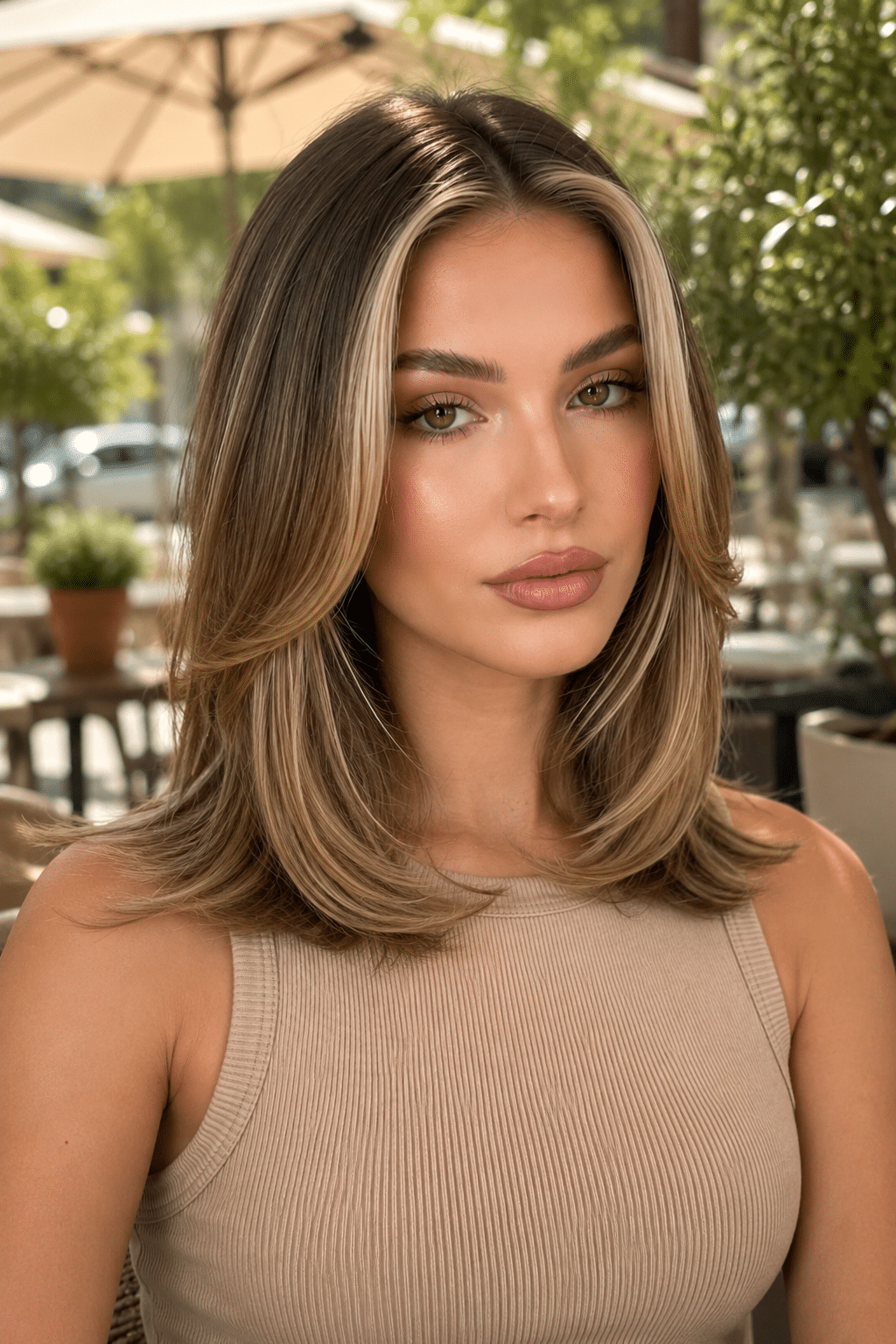
Face-Framing Layered Hair is one of the easiest ways to refresh medium-length hair without losing too much length. Inspired by the image, this look combines soft curtain-style pieces around the face, smooth shoulder-skimming layers, warm brunette depth, brighter blonde sections near the front, and beautifully curved ends.
What makes this haircut especially appealing is how naturally it directs attention toward the eyes and cheekbones. The front pieces create shape without the commitment of short bangs, while the longer layers keep the hairstyle full and polished.
Why Face-Framing Layered Hair Looks So Flattering
The beauty of this cut comes from placement. Instead of adding short layers everywhere, the haircut focuses movement around the front of the face and through the lower lengths.
The shortest pieces can begin near the cheekbones or jaw, then blend gradually into longer sections around the shoulders. This creates a soft frame that can visually lift the face while giving medium hair more shape.
Another reason Face-Framing Layered Hair works so well is that the perimeter can still look healthy and full. The layers create movement, but the ends do not need to be overly thinned or feathered.
The Center Part Makes the Layers Stand Out
A center part gives Face-Framing Layered Hair a balanced, contemporary finish. It allows the two front sections to fall naturally on either side of the face and makes the layered shape easy to see.
The longer curtain pieces can be blow-dried away from the face, creating a soft bend that opens the features rather than covering them.
If you prefer more volume on one side, a slightly off-center part works beautifully too.
Dimensional Color Adds Even More Movement
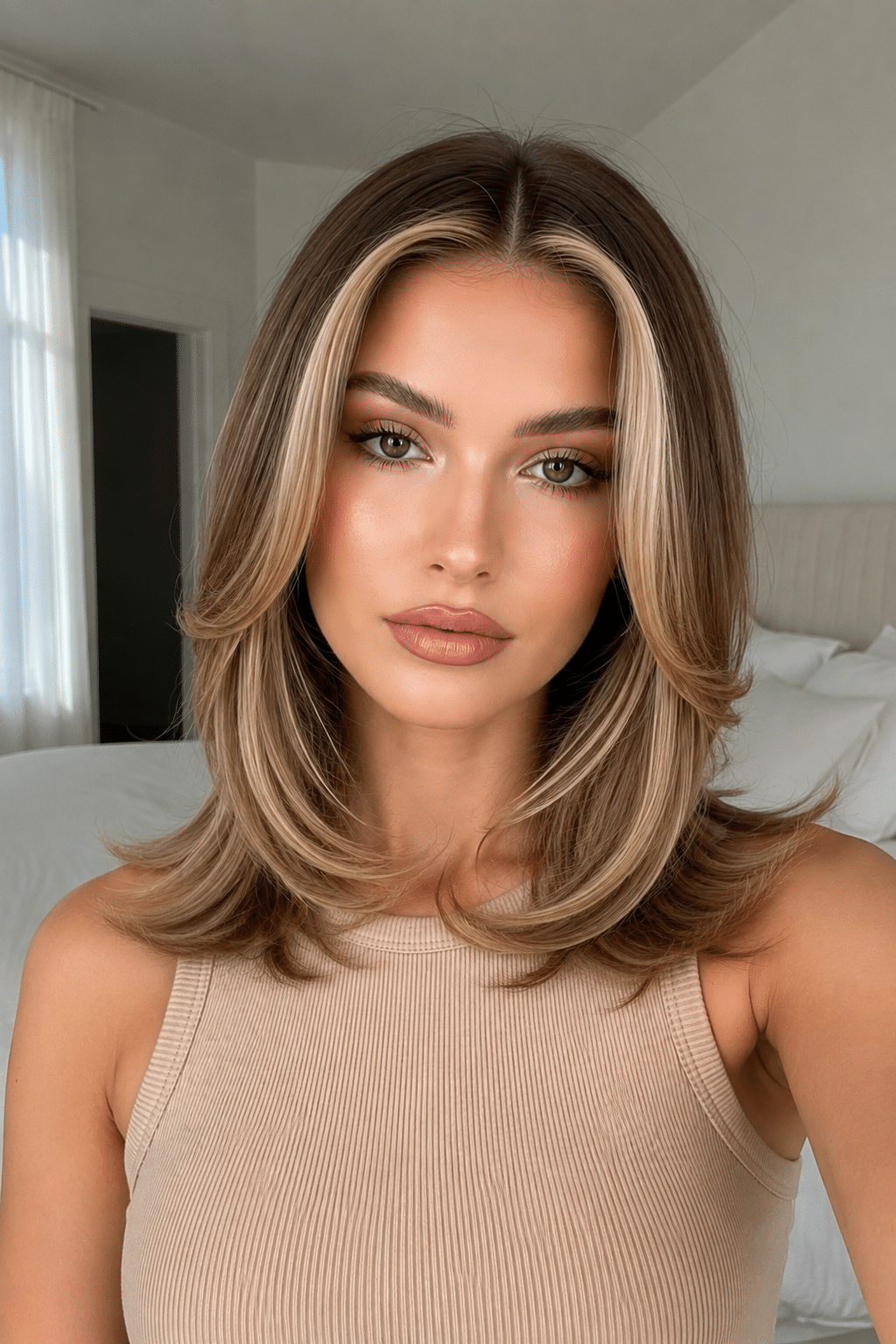
Color can make Face-Framing Layered Hair look even more dimensional. In the image, the hairstyle appears to combine a rich brunette base with lighter beige-blonde sections concentrated around the front.
Those brighter pieces act like a soft money piece, drawing attention toward the face while making the surrounding layers more visible. Deeper brown tones underneath create contrast and prevent the overall color from looking flat.
For a subtle effect, ask for highlights only a few levels lighter than your natural base. For a brighter look, choose creamy beige, honey, caramel, or champagne blonde around the front.
How to Ask Your Stylist for This Cut
When requesting Face-Framing Layered Hair, bring a reference photo and be specific about where you want the shortest layers to start.
Ask for medium-length hair that sits around the shoulders or collarbone, with soft front layers beginning near the cheekbones or jaw. The rest of the haircut should blend gradually into longer sections so the shape feels smooth rather than choppy.
If your hair is fine, ask your stylist to keep the lower perimeter relatively full. If your hair is thick, subtle internal weight removal can help the layers move more freely.
How to Style Face-Framing Layered Hair at Home
Styling this cut is easiest when you focus first on the front sections. Start with towel-dried hair and apply heat protectant. Add lightweight mousse at the roots if you want more volume, or use a smoothing cream through the mid-lengths if your hair is prone to frizz.
Blow-dry the front pieces with a medium or large round brush, directing them away from the face. This creates the curved curtain effect that gives the hairstyle its polished shape.
For the lower layers, turn the brush slightly inward or outward as you reach the ends. A soft bend is enough; the hairstyle should feel airy rather than heavily curled.
The Round-Brush Blowout Effect
A round-brush blowout is one of the best ways to show off Face-Framing Layered Hair. The lifted roots and curved ends make every layer easier to see.
Work in sections and lift the hair upward from the scalp before directing the airflow down the strand. Let each section cool around the brush for a few seconds before releasing it.
For extra volume, place large Velcro rollers in the front and crown while the hair cools. Once removed, gently separate the layers with your fingers instead of brushing away the shape.
Face-Framing Layered Hair for Fine Hair
Fine hair can wear this style beautifully when the layering is controlled. The most important thing is to avoid removing too much density from the bottom.
Keep the overall length blunt or softly rounded, then add only a few front layers to create shape. This preserves the appearance of fullness while still giving the hairstyle movement.
A root-lifting spray, lightweight mousse, and dry texture spray can add body without weighing the hair down.
Face-Framing Layered Hair for Thick Hair
Thick hair can also benefit from this cut because carefully placed layers reduce heaviness around the face and shoulders.
Ask your stylist for long internal layers and subtle weight removal through the middle of the haircut. This allows the hair to move without making the ends look thin.
When styling, use a smoothing cream before blow-drying and a small amount of serum at the ends after styling.
Best Lengths for the Look
Face-Framing Layered Hair works at several lengths, but shoulder and collarbone lengths are especially flattering because they give the front pieces enough room to blend naturally.
A shorter version can sit just above the shoulders for a bouncier effect. A longer version can extend several inches below the collarbone and create a softer, more flowing silhouette.
The right length depends on your natural texture, density, and how much daily styling you want to do.
How to Make the Layers Last All Day
To keep Face-Framing Layered Hair looking polished for hours, allow the front pieces to cool completely after blow-drying before touching them.
Use flexible hairspray rather than a heavy finishing spray. The goal is to preserve movement, not freeze the layers in place.
If your hair tends to fall flat, add dry texture spray underneath the crown and front sections. Avoid applying too much oil near the roots because it can reduce volume quickly.
Styling Variations to Try
This haircut can look completely different depending on the finish.
For a sleek style, blow-dry the hair smooth and use a flat iron only where needed. Curve the front sections gently away from the face.
For a softer look, add loose waves with a medium curling iron and alternate the direction of the curls. Keep the ends slightly straighter for a modern effect.
For an everyday style, tuck one side behind the ear and let the other face-framing section fall naturally.
Best Occasions for This Hairstyle
Face-Framing Layered Hair is versatile enough for almost any occasion. It looks polished for work, soft and romantic for date nights, and elegant enough for weddings, birthdays, dinners, and formal events.
For a special occasion, add more volume at the crown and stronger bends through the front. For everyday wear, keep the finish smoother and more relaxed.
The haircut also works beautifully with simple hair accessories such as slim barrettes, pearl clips, or delicate headbands.
Outfit and Makeup Pairings
The soft shape pairs beautifully with clean, neutral outfits. Beige, cream, chocolate brown, black, denim, and soft blush tones all complement dimensional brunette and blonde color.
Gold jewelry works especially well with warm highlights, while silver accessories pair nicely with cooler beige-blonde tones.
For makeup, luminous skin, soft brown eyeshadow, defined lashes, peach or rose blush, and a nude lip create an effortless finish that matches the polished hairstyle.
How to Maintain the Cut
Regular trims help Face-Framing Layered Hair keep its shape. The front pieces can lose definition as they grow, especially if they are designed to sit around the cheekbones or jaw.
A trim every eight to ten weeks is a good starting point for medium-length hair. If you want to grow the style longer, your stylist can simply refresh the face-framing pieces while keeping most of the overall length.
Color maintenance will depend on how bright the front highlights are. A gloss or toner between highlighting appointments can help maintain shine and keep the blonde looking fresh.
Frequently Asked Questions
Does this style work without highlights?
Yes. The haircut works beautifully in brunette, blonde, copper, black, or red hair. Highlights simply make the different layers easier to see.
Can naturally wavy hair wear this cut?
Absolutely. Natural waves can make the layers look even softer and more effortless. The stylist should adjust the layer placement to match the natural texture.
Do I need curtain bangs?
No. The front pieces can remain much longer than traditional curtain bangs while still creating a face-framing effect.
Is this haircut difficult to style?
Not necessarily. A quick round-brush blow-dry through the front can be enough to bring the layers to life.
Final Thoughts
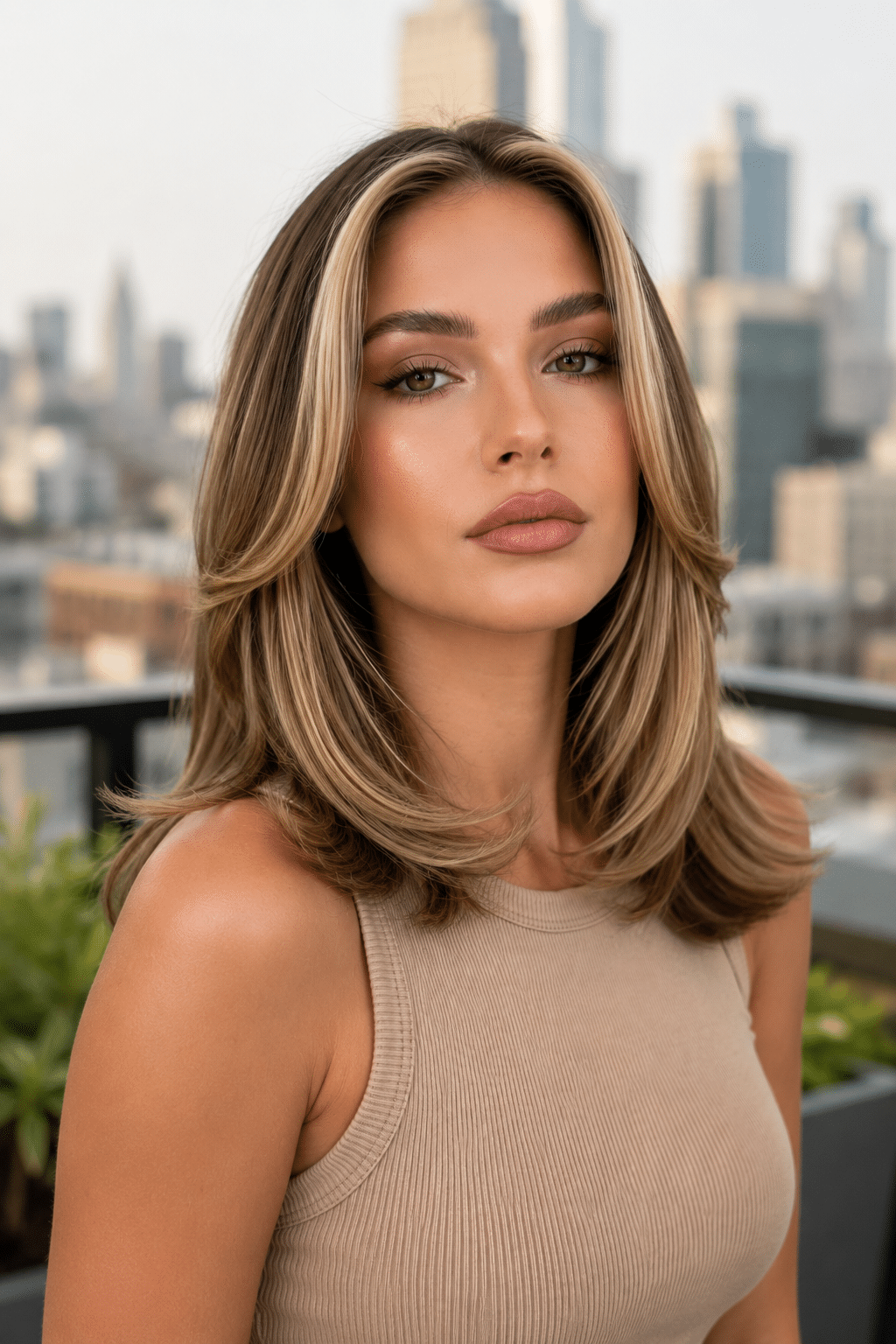
Face-Framing Layered Hair is a beautiful option when you want a noticeable change without sacrificing your medium length. The soft front sections highlight the face, the longer layers create movement, and dimensional color can make the entire haircut look even richer.
Whether you wear it sleek, softly curved, or loosely waved, the style offers a polished shape that feels modern, flattering, and easy to personalize. For anyone wanting an elegant update with movement and softness, Face-Framing Layered Hair is a timeless salon-worthy choice.