
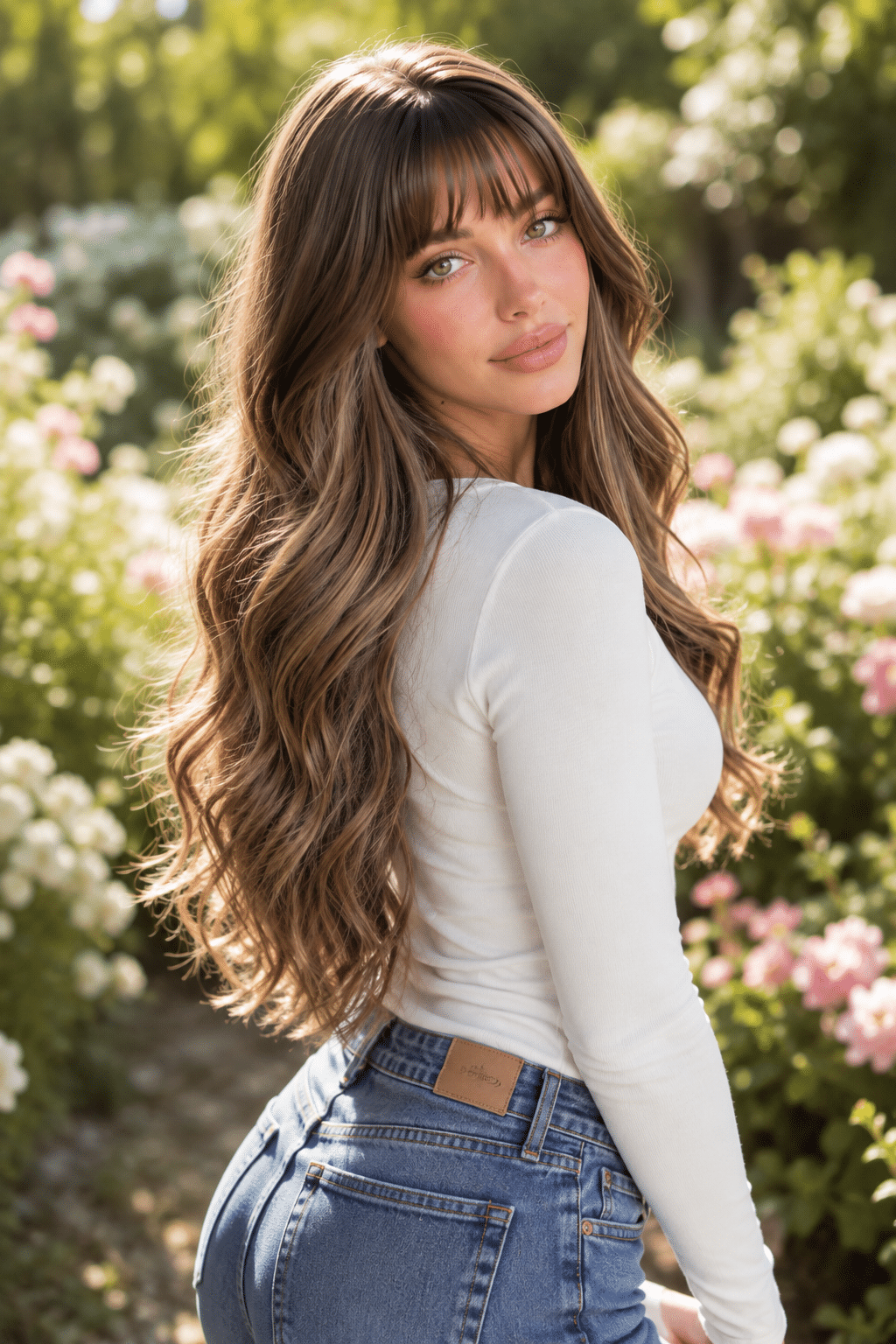
There is something instantly romantic about long layered hair with soft bangs. The hairstyle in the image combines flowing brunette lengths, gentle waves, airy fringe, and shorter pieces that frame the face without taking away from the overall length. It looks polished, but it does not feel overly styled.
The layers keep the hair from appearing heavy, while the bangs soften the forehead and bring attention to the eyes. Warm brown tones and subtle caramel ribbons make every bend more visible, giving the hair a glossy, dimensional finish. This balance of movement, softness, and fullness makes the style suitable for everyday wear, date nights, photographs, work events, and special occasions.
Unlike a blunt long haircut, this layered style has shape from the crown to the ends. The shorter pieces create lift around the cheeks, and the longer layers preserve the luxurious effect of waist-length or chest-length hair.
What Defines Long Layered Hair With Soft Bangs?
The defining feature of long layered hair with soft bangs is the smooth transition between the fringe, the face-framing sections, and the longest lengths. Nothing should look sharply disconnected. The bangs remain light and movable, while the front layers gradually extend toward the cheekbones, jawline, and shoulders.
The main length stays full through the bottom. This matters because excessive layering can make long hair look thin or uneven. A well-balanced cut removes enough weight to create movement without sacrificing density.
The waves shown in the inspiration are loose rather than tightly curled. They begin around the middle lengths and continue through the ends, creating soft texture that reveals the different layer lengths. A center or slightly off-center part keeps the fringe open and flattering.
Why This Haircut Flatters So Many Face Shapes
Long layered hair with soft bangs can be adapted to nearly every face shape because the bang length and layer placement are easy to customize.
For a round face, longer bangs that separate near the center can create vertical balance. Layers beginning below the cheekbones prevent unnecessary width. A square face benefits from curved pieces around the jaw, while a heart-shaped face often looks balanced with soft fringe and fuller movement near the shoulders.
An oval face can wear almost any version of the style, including a fuller fringe or shorter cheekbone layers. For a longer face, the bangs can sit slightly lower across the forehead, and the waves can be styled with more width around the cheeks.
The goal is not to copy one exact shape. The most flattering version works with the natural hair texture, density, and facial proportions.
Choosing the Right Soft Bangs
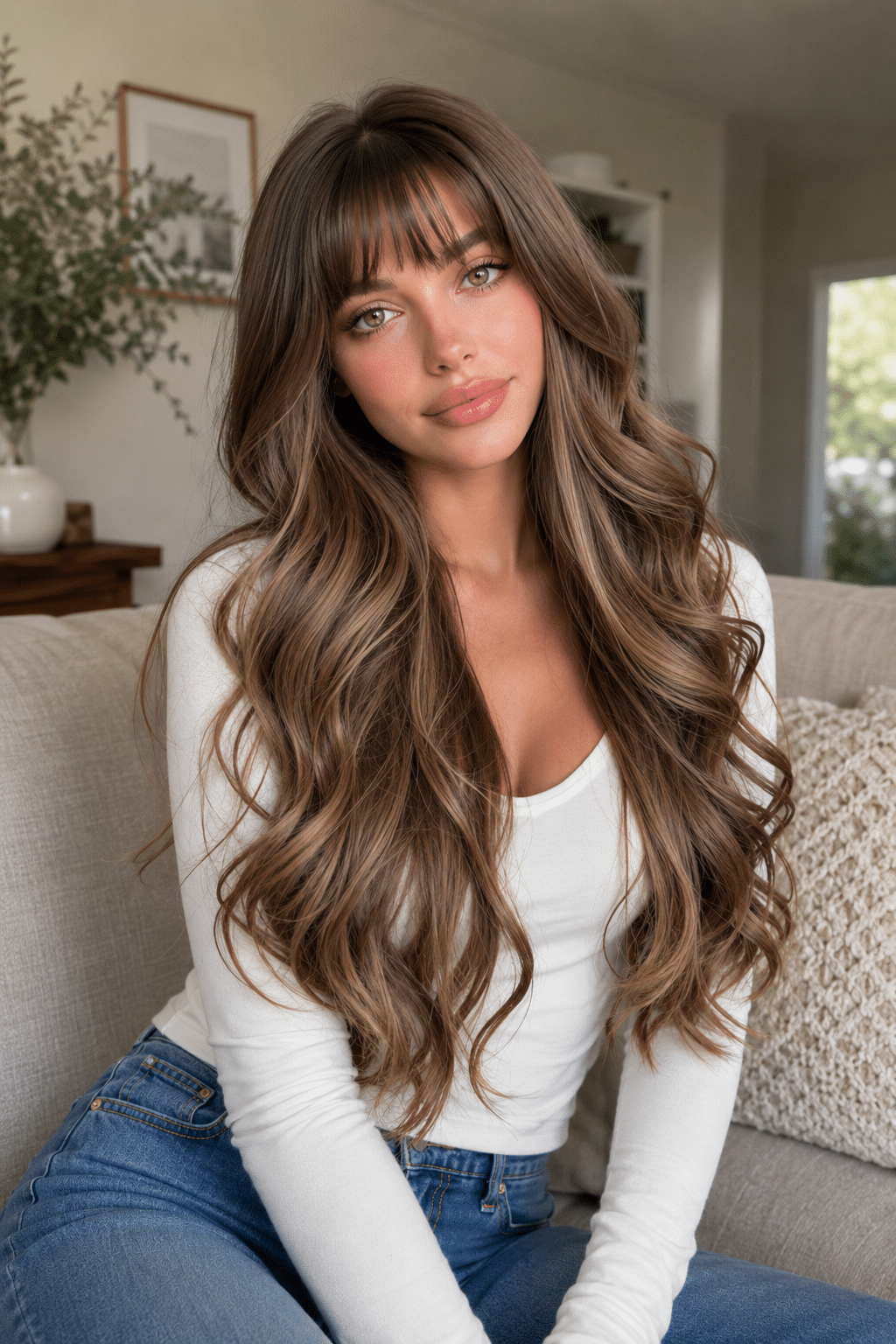
The fringe is what gives long layered hair with soft bangs its delicate, youthful character. It should feel light enough to move naturally and long enough to blend into the side layers.
Wispy bangs are ideal for someone who wants a subtle change. They reveal part of the forehead and require less commitment than a dense blunt fringe. Curtain-inspired bangs are slightly longer and open near the center, making them easy to sweep aside or tuck behind the ears.
A fuller soft fringe can work beautifully on thick hair, but it should still contain gentle separation. Hair that is fine may look better with fewer strands in the bang section so the rest of the front hair retains fullness.
The shortest part of the bangs can sit near the eyebrows, while the sides gradually extend toward the cheekbones. This curved shape helps connect the fringe to the rest of the haircut.
How to Ask Your Stylist for This Look
Bring the inspiration image to your salon appointment and ask for long layered hair with soft bangs, flowing face-framing pieces, and a full lower perimeter. Explain that you want visible movement without thin ends.
Tell your stylist where you want the shortest front layer to begin. Cheekbone-length pieces create a noticeable frame, while jaw-length sections provide a softer, lower-maintenance result. The bangs should remain airy and blend into the side layers rather than forming a heavy horizontal line.
Discuss how you normally wear your hair. Someone who enjoys blowouts and loose waves can support more visible layering. Someone who usually air-dries may prefer longer, subtler sections that work naturally without daily heat styling.
Your stylist should also consider density. Fine hair needs fewer layers, while thick hair can handle more internal weight removal. The final cut should look balanced both styled and natural.
The Best Brunette Color for Long Layered Hair With Soft Bangs
Rich brunette shades complement this haircut because they create depth between the layers. Chocolate brown gives the hair warmth, espresso creates a dramatic glossy finish, and chestnut adds subtle red-gold reflections in natural light.
The hairstyle in the image appears dimensional rather than completely uniform. Fine caramel or mocha ribbons are placed through the lengths, allowing the waves to catch the light. Face-framing highlights can also brighten the complexion and emphasize the bangs.
For a natural result, keep the highlights only a few levels lighter than the brunette base. Strong blonde contrast creates a bolder effect, while soft brown and caramel tones preserve the elegant, blended appearance of long layered hair with soft bangs.
A salon gloss can refresh faded color, increase shine, and smooth the surface without changing the overall shade dramatically.
How to Style Long Layered Hair With Soft Bangs
Begin with clean, towel-dried hair and apply a lightweight heat protectant. Add volumizing mousse near the roots when the hair tends to fall flat, then use a small amount of smoothing cream through the middle lengths and ends.
Rough-dry the hair until it is mostly dry. Move the bangs gently from side to side during this stage so they do not separate too strongly or lie flat against the forehead.
Use a round brush to shape the fringe. Place the brush underneath, lift slightly, and direct the airflow downward. Allow the bangs to curve softly rather than creating a dramatic roll.
Divide the remaining hair into sections. Blow-dry each section with a medium or large round brush, directing the front layers away from the face. This reveals the layered shape and creates a smooth foundation for waves.
Once the hair is dry, use a large curling iron to add loose bends. Curl the front sections away from the face and alternate directions through the back. Leave the ends slightly relaxed for a modern finish.
Allow the curls to cool before loosening them with your fingers. Finish long layered hair with soft bangs with flexible-hold hairspray and a small amount of serum on the ends.
How to Create Soft Waves Without Making Them Look Too Perfect
The most attractive waves have gentle variation. Curling every section in exactly the same direction can make the hairstyle appear stiff, while alternating selected sections creates a more natural result.
Use medium-sized sections and hold the curling iron vertically. Begin around the middle lengths instead of placing the curl directly at the roots. This keeps the top smoother and allows the movement to build gradually.
After the curls cool, separate them with your fingers rather than a fine brush. A wide-tooth comb can be used when a softer, more blended finish is preferred.
The finished hairstyle should remain touchable. Heavy hairspray, wax, or oil can make the layers stick together and remove the airy movement that makes this style so appealing.
How to Style the Bangs Every Morning
Soft bangs usually need only a few minutes of attention. Lightly dampen the fringe, then blow-dry it from side to side before directing it into the final shape. This helps reset bends created during sleep.
A small round brush gives the bangs a polished curve. A flat brush creates a straighter and more natural result. When using a flat iron, keep the temperature moderate and create only a slight bend.
Dry shampoo can refresh the roots between washes, but too much product may make the fringe look powdery. Apply a small amount underneath and brush it through carefully.
When the bangs feel too long, they can be parted in the center and worn as short curtain bangs. This makes the haircut easier to maintain between salon visits.
Heatless Styling Options
Long layered hair with soft bangs can also be styled without direct heat. Large foam rollers create smooth movement, while a heatless curling ribbon produces broader waves through the lengths.
For a relaxed result, divide slightly damp hair into two loose braids before bed. Release the braids only after the hair is completely dry, then shape the front pieces with your fingers.
The bangs can be set with a small Velcro roller while the rest of the hair dries. Roll the fringe away from the face, allow it to set, and separate it gently after removing the roller.
Heatless methods may produce a softer finish than a curling iron, but they reduce repeated heat exposure and help preserve shine.
How to Maintain the Cut
Regular trims keep long layered hair with soft bangs balanced and healthy. The main length usually benefits from trimming every eight to twelve weeks, while the fringe may need attention every four to six weeks.
Use conditioner through the middle lengths and ends, and apply a moisturizing mask once a week. Long hair is more prone to dryness because the ends are older and experience more brushing, heat, and friction.
Detangle gently from the ends upward. Avoid tight elastics that can cause breakage, and use heat protection before every blowout or curling session.
Sleeping on a smooth pillowcase can reduce tangles and help preserve the waves. A loose braid or low ponytail can also prevent the lengths from rubbing excessively during the night.
Common Mistakes to Avoid
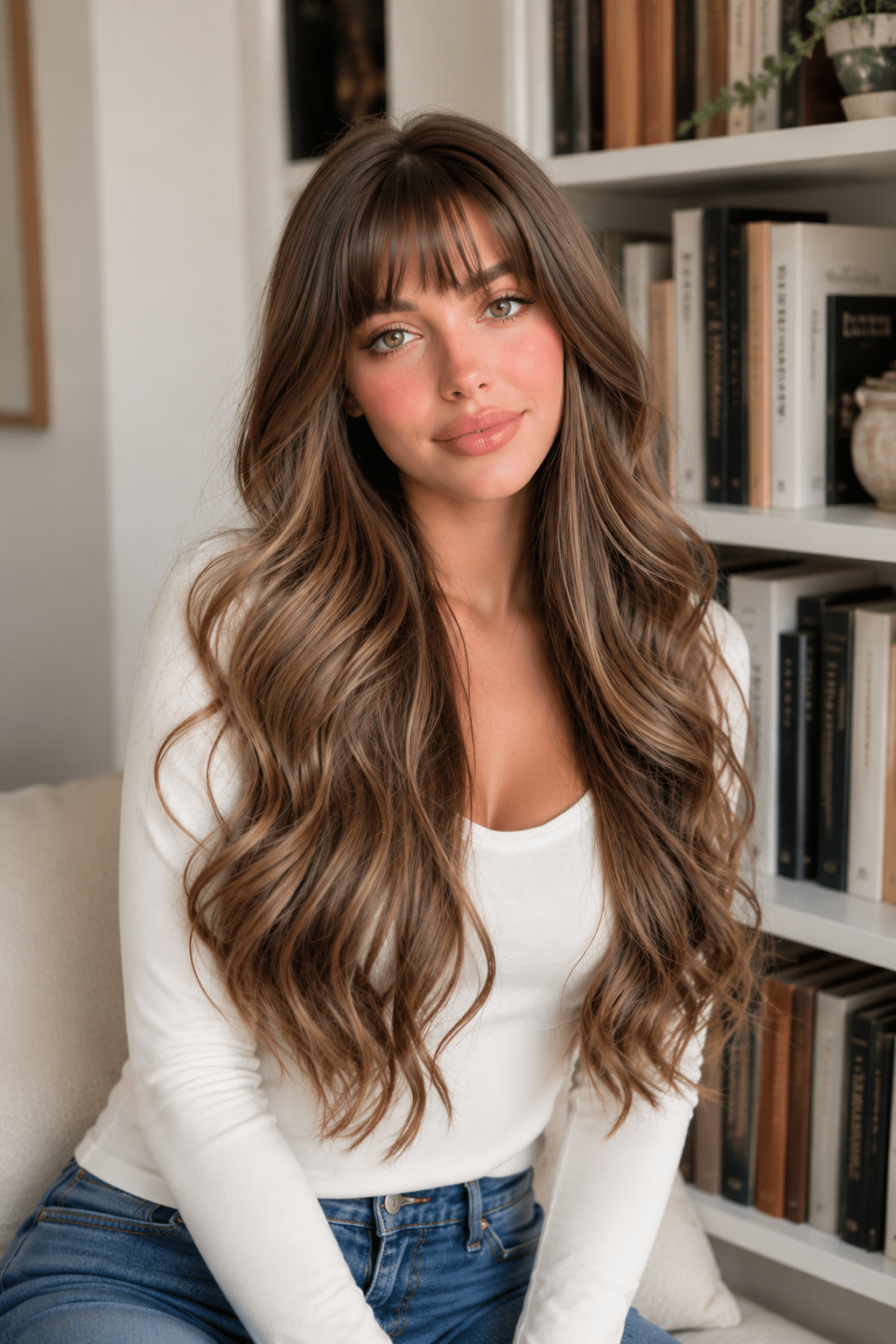
One common mistake is adding too many short layers. This can create excessive volume near the crown while leaving the lower lengths thin. The layers should remain long, blended, and appropriate for the hair density.
Another mistake is making the fringe too heavy. Dense bangs may overpower the face and require more daily styling. Soft separation usually creates a more versatile result.
Avoid applying heavy oils near the roots or bangs. These products can flatten the top and make the fringe look greasy. Concentrate shine products only on the ends.
Do not brush the waves aggressively after styling. Gentle separation preserves definition and helps the haircut remain full.
Frequently Asked Questions
Is this haircut suitable for fine hair?
Yes. Fine hair can wear long layers when the shortest sections remain relatively long and the lower perimeter stays full. The bangs should be light rather than dense.
Can thick hair wear this style?
Yes. Thick hair often benefits from internal layering that removes weight while preserving the outer shape.
Are soft bangs difficult to maintain?
They require regular trimming and brief daily styling, but they are usually easier to manage than short, blunt bangs.
Can naturally wavy hair wear this haircut?
Yes. Long layers can help natural waves form more clearly and prevent the lengths from feeling heavy.
How often should the bangs be trimmed?
Most soft bangs need reshaping every four to six weeks, depending on how quickly the hair grows.
Can the waves be created without heat?
Yes. Rollers, braids, twisted buns, and heatless curling ribbons can all create gentle movement.
Final Thoughts on Long Layered Hair With Soft Bangs
Long layered hair with soft bangs offers a beautiful combination of length, movement, and romantic softness. The fringe highlights the eyes, the face-framing pieces shape the cheeks, and the flowing layers prevent long hair from appearing heavy.
The hairstyle can be customized for different hair densities, textures, colors, and face shapes. It looks polished with a smooth blowout, romantic with loose waves, and effortless when allowed to follow the natural texture.
With regular trims, gentle conditioning, careful heat protection, and lightweight styling products, long layered hair with soft bangs can remain glossy, full, and beautifully shaped.